One of the first questions homeowners ask us is simple: how many wires should an electric fence have? You will hear people talk about 4-wire, 6-wire and 8-wire fences, and the price you are quoted moves with that number. The right answer is not “as many as possible”. It depends on your wall height, how exposed the property is, and what you want the fence to do.
This guide explains electric fence wire strands in plain terms: what each layout is good for, how height and spacing work, which wire types are used, and how strand count affects your price. NagTech is an official Nemtek distributor and has installed electric fences across Pakistan since 2010, from offices in Lahore, Islamabad and Faisalabad.
Why the number of strands matters
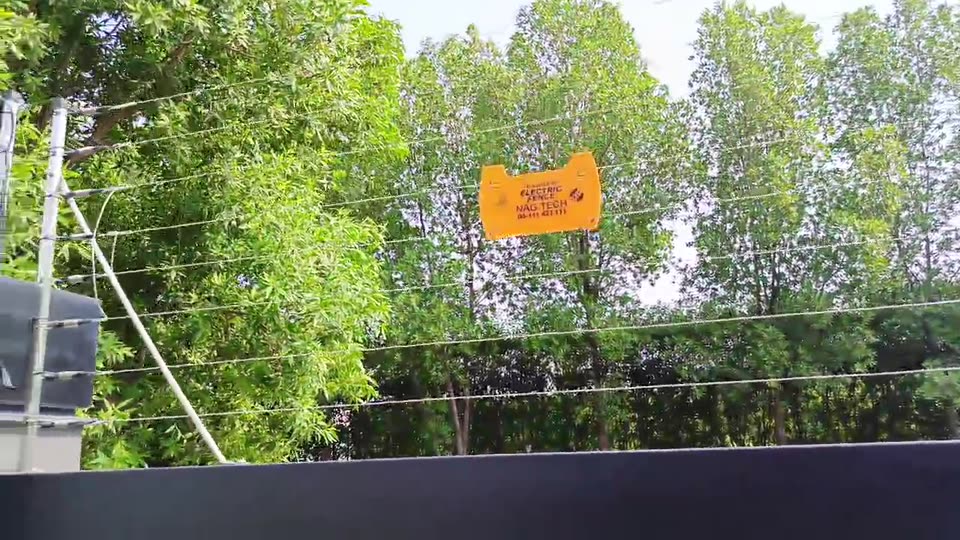
An electric fence works by sending short, high-voltage, low-current pulses from the energizer along the wires. Anyone who touches a live wire feels a sharp, non-lethal shock, and the alarm goes off if a wire is cut, shorted or tampered with. The strands are the part of the system an intruder actually has to get past.
Strand count decides two things:
- How hard the fence is to climb or squeeze through. More strands close the gaps, so it becomes harder to step between wires or push a body through without touching one.
- How tall the protected zone is. More strands usually mean taller brackets, which adds height on top of your boundary wall.
The energizer still does the work, but a fence with too few wires leaves gaps that a determined person can try to exploit.
4 vs 6 vs 8 strands: which layout suits you?
Most residential and commercial jobs in Pakistan fall into one of three layouts. Here is how we think about each one.
4-strand electric fence
A 4-wire fence is the lighter option. It suits homes where the boundary wall is already high, the property is not on a busy or exposed road, and the main goal is a clear visible deterrent with an alarm. It uses less wire, fewer insulators and shorter brackets, so it sits towards the lower end of the price range.
6-strand electric fence
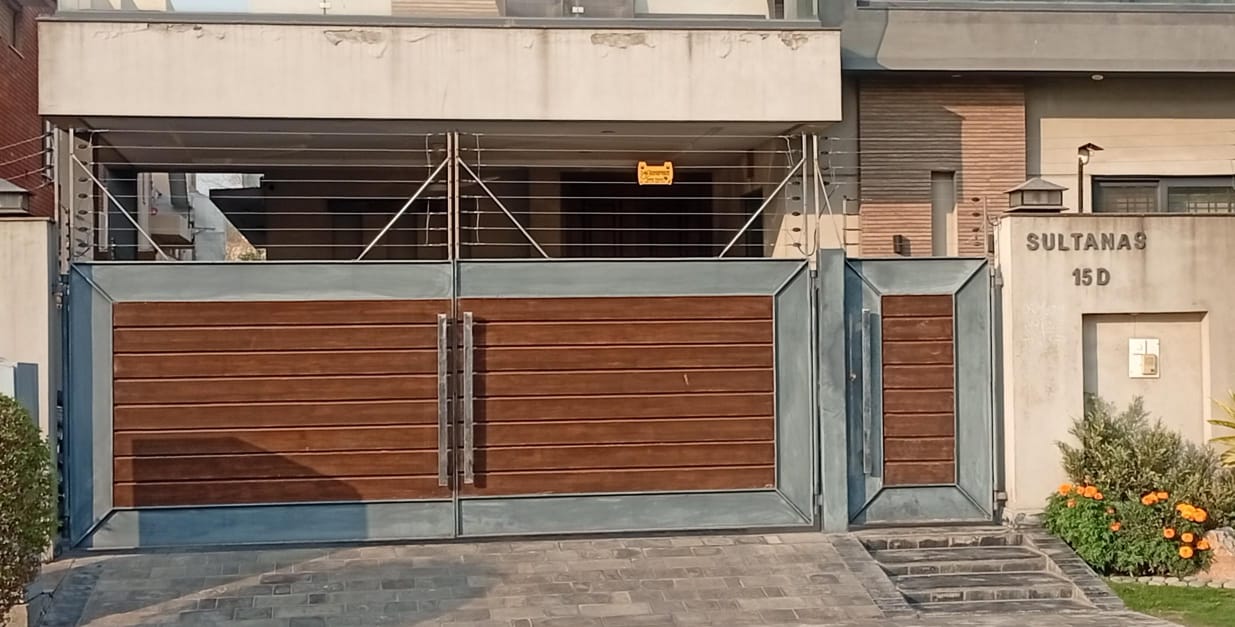
Six wires is the common middle choice for family homes in housing societies such as DHA, Bahria Town, Johar Town or Gulberg. It gives a taller, denser barrier than four wires and is noticeably harder to step through, while keeping the cost reasonable. For a typical 5 marla to 1 kanal house, this is often where the conversation starts.
8-strand electric fence
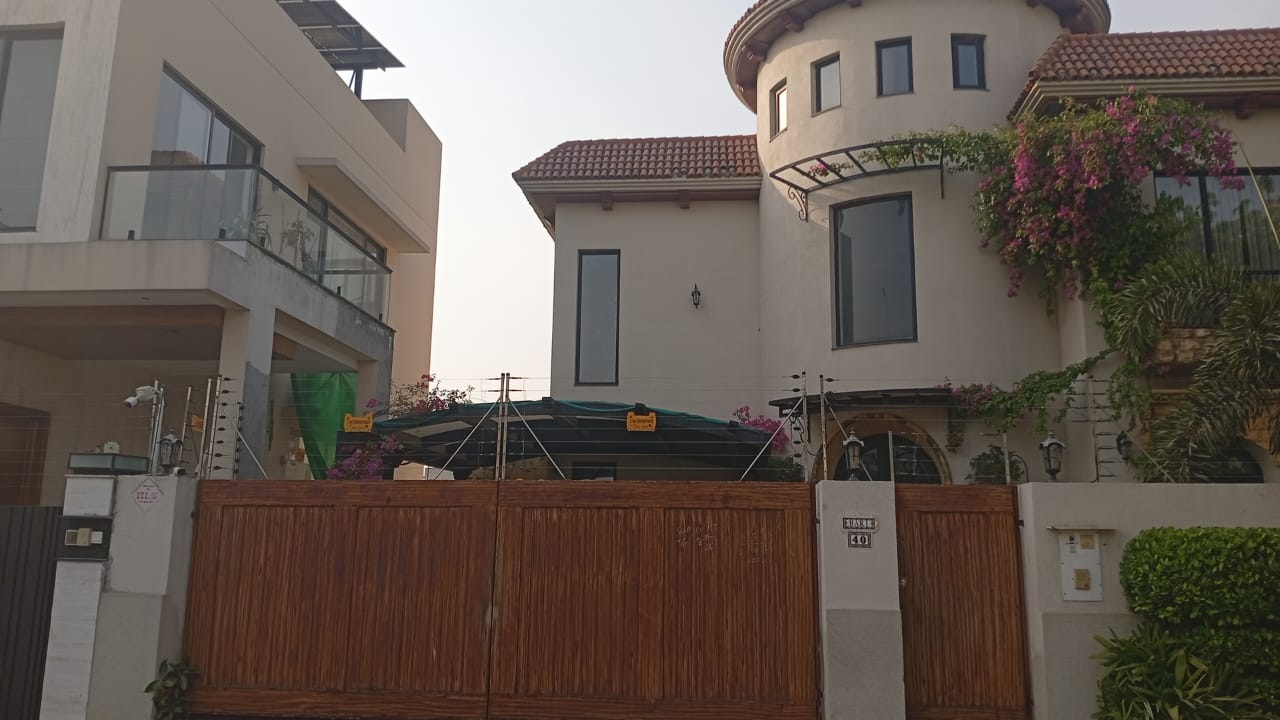
Eight wires gives denser coverage and more height. It makes sense on lower walls, corner plots, houses next to empty plots, farmhouses, factories, warehouses and any site where you want maximum climb resistance. It uses the most material and labour per running foot, so it sits higher in the price band.
There is no single correct number for every house. A tall wall on a quiet street may be well served by four strands, while a lower wall next to an open plot may need eight. That is why we recommend a layout only after seeing the site.
Height and spacing: what really keeps intruders out
The number of wires and the gap between them work together. Adding strands without enough bracket height just squeezes them closer; adding height without enough strands leaves wide gaps. A good layout balances both.
Bracket height
Wall-top brackets lift the fence above your existing wall. A taller bracket with more strands raises the effective height of your boundary. If your wall is already high, you may not need a very tall bracket. If it is low, extra height from the fence matters more.
Even spacing
Spacing should be close enough that a hand, foot or body cannot pass between two wires without contact. It also needs to stay even along the whole run, including corners, steps and level changes. On stepped walls and sloping plots, extra brackets are added at each change so the gaps do not open up.
Gates and weak points
Gates, pillars and places where a neighbouring roof or tree sits close to your wall are the usual weak points. These need attention in the design, whatever strand count you choose. Branches and creepers should also be kept clear of the wires, because anything touching them drains power and can set off false alarms.
Stainless vs galvanised wire
The type of wire matters as much as the number of wires. Cheap jobs sometimes use thin or low-grade wire that sags, rusts or snaps within a few seasons. For a security fence, you want wire that stays tight and conducts well for years.
- High-tensile galvanised steel wire is strong and holds its tension well over long runs. The zinc coating protects it from rust.
- Stainless steel wire resists corrosion well, which helps in humid areas, during monsoon season and in places with smog and dust.
As an official Nemtek distributor, NagTech supplies genuine Nemtek components, including high-tensile galvanised steel wire, stainless steel straining wire, brackets, insulators and tensioners. Good insulators and proper tensioning are just as important as the wire itself, because a loose or poorly insulated line loses power and causes faults.
How strand count affects your price
NagTech’s installed electric fence price is PKR 350–950 per running foot, and energizers start from Rs 50,000. Where your job lands in that range depends on a few things, and the number of strands is one of the biggest:
- Strands and height: more wires and taller brackets mean more material and labour per foot, so an 8-strand fence costs more per running foot than a 4-strand fence of the same length.
- Running feet: the total length of wall that will actually carry the fence.
- Energizer: the Nemtek model must match the total wire length and the number of zones.
- Wall condition and layout: corners, steps, gates and any wall repairs.
For worked examples by perimeter length, see our electric fence price guide. If you want to estimate the running feet for your house, our guide on electric fence for 5 marla, 10 marla and 1 kanal houses walks you through it.
Our recommendation
If you are unsure, here is a simple starting point:
- High wall, quiet street, basic deterrent needed: 4 strands can be enough.
- Typical family home in a housing society: 6 strands is usually the balanced choice.
- Low wall, corner plot, empty plot next door, farmhouse or commercial site: consider 8 strands.
Whatever you choose, make sure the quote names the energizer model, the wire type and the strand count in writing. Two quotes that look similar per foot can be very different jobs if one uses fewer strands or a cheaper wire. Our Nemtek electric fence page explains the genuine energizers and components we install.
Book a free site inspection
The quickest way to get the right strand count is to let a technician look at your wall. On a free NagTech site inspection, we measure the walls that need fencing, check gates, corners and level changes, recommend 4, 6 or 8 strands, size a genuine Nemtek energizer and give you a written per-foot quote.
We cover Lahore, Islamabad, Faisalabad and other cities across Pakistan. Find out more about our electric fence installation in Lahore, or call or WhatsApp 0311-1427111 to book your survey. Our offices are open 24/7.
Frequently asked questions
How many wires should an electric fence have for a house?
Most family homes in Pakistan use 6 strands. Four strands can suit a house with a high wall on a quiet street, while 8 strands are better for low walls, corner plots or higher-risk properties.
Is an 8-wire electric fence better than a 4-wire fence?
An 8-wire fence is taller, denser and harder to climb, but it costs more per running foot. It is not automatically better for every home. The right layout depends on your wall height and how exposed the property is.
Does the number of strands change the price?
Yes. More strands need more wire, insulators, taller brackets and labour, so the per-foot rate rises within NagTech’s PKR 350–950 per running foot range. The energizer, priced from Rs 50,000, is quoted separately.
Which wire is best for an electric fence in Pakistan?
High-tensile galvanised steel wire and stainless steel wire are both used in proper security fences. Stainless steel resists corrosion well in humid and monsoon conditions. Avoid thin, low-grade wire that sags or rusts quickly.
Can I add more strands to my existing electric fence?
Often, yes, if the brackets and energizer can support the extra wire. Our technicians can inspect your current fence and tell you whether an upgrade or a new layout makes more sense.
Do more strands need a bigger energizer?
Possibly. The energizer has to match the total length of live wire and the number of zones. When you add strands, the total wire length goes up, so we check the energizer size as part of the quote.