If you are automating a sliding gate in Pakistan, you will almost certainly end up choosing between two Centurion motors: the D5-Evo and the D10. Both are genuine Centurion sliding gate motors, both run through load shedding on battery backup, and both work with the same remotes and accessories. The real difference is how much gate they are built to move, and how hard they are expected to work every day. Picking the right one comes down to your gate, not to which model sounds bigger.
This guide compares the Centurion D5 Evo vs D10 in plain terms, so you know which one suits your house, plaza or factory before you ask for a quote. NagTech is an authorised Centurion partner and installs both models from our offices in Lahore, Islamabad and Faisalabad.
Centurion D5-Evo vs D10 at a glance
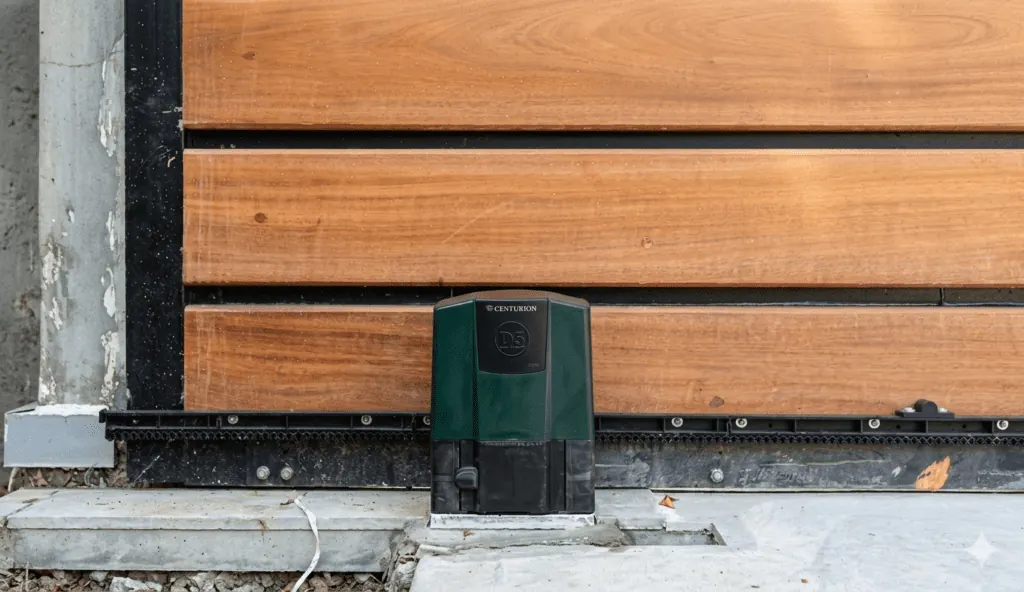
Both motors sit on a base beside the gate and drive it along its track through a gear and a toothed rack fixed to the bottom of the gate. Both use a 24V DC motor with battery backup. Here is how they differ:
- Centurion D5-Evo moves sliding gates up to 500 kg. It is the usual choice for house gates in DHA, Bahria Town, Gulberg, Johar Town and similar areas.
- Centurion D10 moves sliding gates up to 1,000 kg. It is built for heavier gates and for gates that open and close all day, such as factories, warehouses, plazas and housing society entrances.
So the simple rule is this: a normal home gate is usually a D5-Evo job, and a heavy or busy gate is usually a D10 job. The sections below explain why, and where the grey areas are.
Gate weight limits: the first thing to check
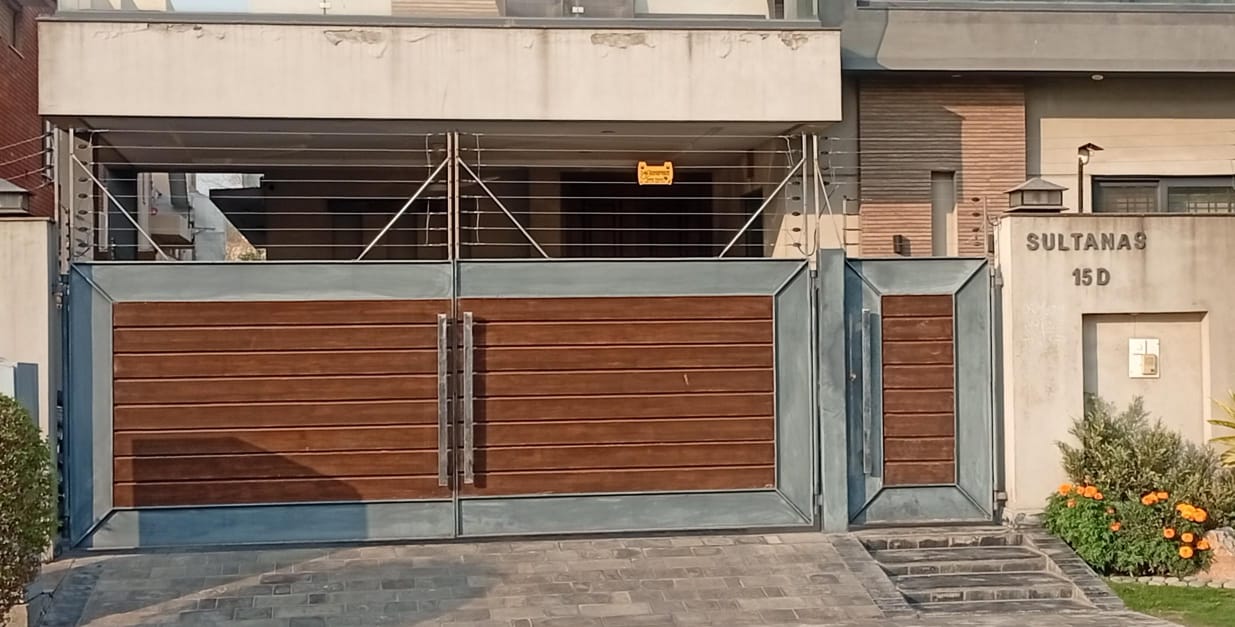
Weight is the main deciding factor. Pakistani gates are often made of solid iron or steel, sometimes with full sheet backing for privacy and a decorative frame on top. Two gates that look the same width can be very different in weight.
When the D5-Evo is enough
- A standard single sliding gate on a 5 marla, 10 marla or 1 kanal house.
- A gate that rolls freely by hand without needing two people to push it.
- A well-built track and wheels that are in good condition.
When you should look at the D10
- A very wide or tall gate, or one with heavy sheet backing and thick sections.
- A gate that is close to or above 500 kg. Running a motor near its limit every day shortens its life.
- Commercial or industrial gates where you would rather have headroom than run close to the limit.
Most people do not know the exact weight of their gate, and that is normal. During our free site survey we look at the gate’s size, material and build, check how it moves, and recommend the model that matches it. We do not oversize a motor for a home that does not need it, and we do not squeeze a heavy gate onto a motor that will struggle.
Duty cycle: how hard the gate works every day
Duty cycle simply means how often the motor is expected to run in a day without overheating or wearing out early. A family home might open the gate a handful of times in the morning and evening. A factory, plaza car park or society main gate may open and close all day long, with staff cars, delivery vans and visitors.
The D5-Evo is designed for normal residential use, and it handles a busy household without trouble. The D10 is a heavier-duty motor intended for gates with a lot of traffic. If your gate is used constantly, the D10 is usually the safer choice even if the gate itself is not very heavy, because it is built to work harder for longer.
When you contact us, tell us roughly how many times the gate opens in a day. That one detail helps us recommend the right motor quickly.
Battery backup and load shedding
For any Pakistani property, a gate motor that stops when the power goes is not much use. Both the D5-Evo and the D10 run on a backup battery, so your gate keeps working through load shedding. Both also have a manual release, so you can open the gate by hand if the battery is ever completely flat.
How long the backup lasts depends on how long the outage is and how many times the gate is used during it. A busy commercial gate will use more battery than a home gate. A few simple habits help the battery last:
- Keep the motor’s mains supply connected so the battery stays charged.
- Keep the gate track clean, so the motor is not fighting dirt and stones.
- Book a periodic service so the battery can be tested and replaced before it fails.
Remotes, security and the G-REMOTE app
This is where the two models are very similar. Both are part of the same Centurion system, so you get the same security features whichever one you choose:
- Code-hopping remotes that change their code every time, which makes them resistant to cloning.
- Anti-crush safety, so the gate stops and reverses if it meets an obstruction.
- Ambush Alarm anti-hijacking mode, which lets you raise an alarm discreetly if you are forced to open the gate.
- G-REMOTE smartphone app compatibility, so the gate can be opened from your phone.
Both motors can also be linked with video intercoms, proximity card readers and keypads. This matters for offices and societies, where staff and residents need their own access without handing out remotes to everyone.
Which one for homes vs factories?
Homes
For most houses, the D5-Evo is the right fit. It handles typical residential gates comfortably, runs through load shedding, and gives you the full Centurion security feature set. Choose the D10 for a home only if your gate is unusually large or heavy, or if the gate is used far more than a normal household gate.
Factories, warehouses and plazas
For industrial and commercial sites, the D10 is usually the better choice. Heavy gates, long working hours and constant traffic from staff and deliveries are exactly what it is built for.
Housing societies and gated communities
Society main gates are often heavy and run all day, so the D10 is the common choice. Many societies also pair the gate with a boom barrier for vehicle control at the entrance.
Before you choose: check the gate itself
A new motor will not fix a badly built gate. Before installation, the gate should roll smoothly by hand along a straight, level track. If the track is bent or broken, the wheels are worn, or the gate drags on the ground, these need repair first. Once the track and rack are ready, most sliding gate motors are installed in a day.
If your gate swings open like a door rather than sliding, neither of these models is the right fit. Have a look at our Centurion swing gate motors instead.
Get the right Centurion motor for your gate
Choosing between the D5-Evo and the D10 is easier when someone has actually seen your gate. NagTech offers a free, no-obligation site survey, and we will recommend the right motor for your gate’s weight and daily use, explain the battery backup, and give you a clear quote.
See our Centurion sliding gate motor installation page for more detail, or browse our full range of electric gate motors. To book your survey, call or WhatsApp us on 0311 1427111.
Frequently asked questions
Which is better for a home, the Centurion D5-Evo or the D10?
For most homes, the D5-Evo. It suits house gates up to 500 kg. The D10 is meant for heavier or high-traffic gates up to 1,000 kg.
Can the D5-Evo and D10 work during load shedding?
Yes. Both run on a backup battery, so the gate keeps working when the power goes, and both have a manual release for emergencies.
Can I open my gate from my phone?
Yes. Both models are compatible with Centurion’s G-REMOTE smartphone app, as well as code-hopping remotes, keypads, card readers and intercoms.
How do I know how heavy my gate is?
You don’t need to weigh it yourself. During the free site survey, our team checks the gate’s size, material and condition and recommends the right model.
Can my existing sliding gate be automated?
Usually, yes, as long as it rolls freely by hand on a straight, level track. If the track or wheels are damaged, they should be repaired first.
How long does installation take?
Most sliding gate motors are installed in a day once the track and rack are ready.